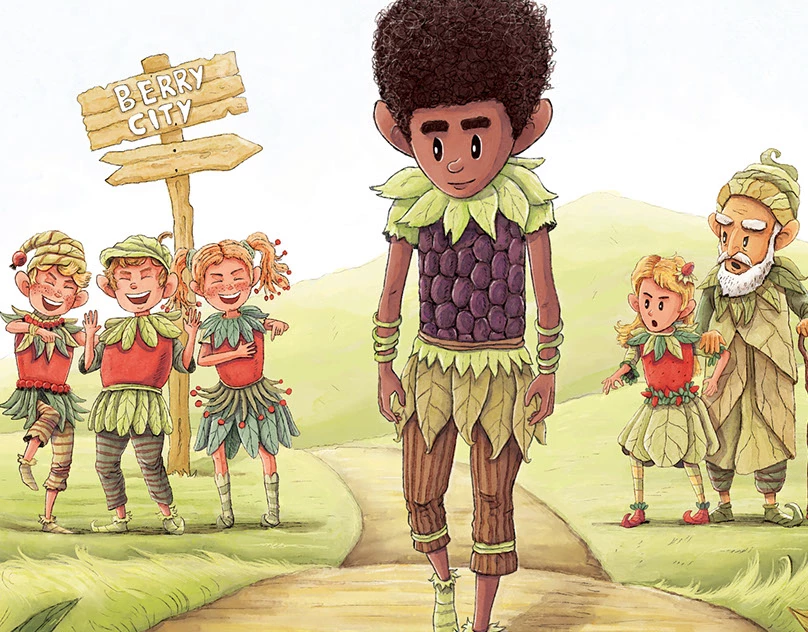
Finding the right children’s book illustrator for hire is about much more than choosing an artist whose work looks beautiful.
Illustrations help shape how young readers experience a story. They introduce characters, create atmosphere, communicate emotion and bring moments to life that words alone cannot always express.
Whether you are an independent author working on your first picture book or a publisher developing a new title, choosing the right illustrator can have a major impact on the final book.
Here are some of the most important things to consider before hiring a children’s book illustrator.
Look for storytelling, not only beautiful artwork
A strong children’s book portfolio should show more than individual illustrations.
Picture book illustration is visual storytelling.
An illustrator needs to understand how characters move through a story, how emotions develop and how one scene connects naturally to the next.
When reviewing a portfolio, look for examples that demonstrate:
- Recurring characters
- Different facial expressions and emotions
- Interaction between characters
- Varied environments
- Visual continuity
- Strong composition
- Scenes that communicate a story without relying entirely on text
A beautiful single image is valuable, but a picture book usually requires an illustrator who can maintain a consistent visual world across many pages.
Choose an illustration style that fits your story
Every children’s book has its own personality.
A quiet bedtime story may need a very different visual approach from a humorous adventure, an educational book or an energetic character-driven story.
Before contacting an illustrator, think about how you want your book to feel.
Is your story:
- Warm and comforting?
- Playful and funny?
- Magical?
- Adventurous?
- Emotional?
- Educational?
- Whimsical?
You do not need to know the technical name of an illustration style.
Instead, focus on the feeling you want young readers to experience.
A good illustrator can help translate that feeling into characters, environments, color and visual storytelling.
Make sure the characters can stay consistent
Character consistency is one of the most important parts of children’s book illustration.
The same character may need to appear from different angles, in different poses and with many different expressions throughout the book.
They may also appear:
- Happy
- Frightened
- Excited
- Tired
- Surprised
- Angry
- Curious
Despite all these changes, the character still needs to remain immediately recognizable.
When choosing a picture book illustrator, look for projects where the same characters appear across several different scenes.
This is often a better indication of children’s book experience than a portfolio made only from unrelated individual illustrations.
Prepare your manuscript before contacting an illustrator
Your manuscript does not necessarily need to be completely final, but it should be developed enough for the illustrator to understand the project.
Before reaching out, it helps to prepare:
- Your manuscript
- Approximate page count
- Target age range
- Book format
- Expected number of illustrations
- Preferred illustration style
- Publishing schedule
- Character notes
- Any important visual references
It is also useful to prepare a short illustration brief.
However, try not to describe every visual detail.
Part of an illustrator’s role is to contribute visual ideas that complement the text rather than simply repeating it.
Leaving some creative freedom can often result in stronger storytelling.
Ask about the illustration process
Every illustrator has a slightly different workflow, but a professional children’s book illustration project usually develops through several stages.
Manuscript review
The illustrator reads the story and begins identifying important characters, environments, emotional moments and visual opportunities.
Character development
The main characters are explored before the finished pages are created.
This may include different poses, expressions, clothing and personality details.
Thumbnails and rough sketches
The illustrator plans compositions and determines how the visual story will move from page to page.
Sketch approval
The author or publisher reviews the proposed illustrations before final artwork begins.
This is an important stage for making larger changes.
Final artwork
After the sketches are approved, the illustrator develops the finished artwork.
Revisions
Any agreed adjustments are completed according to the project terms.
Understanding this workflow before beginning can make the collaboration much smoother.
Discuss illustration rights and usage
Illustration is creative work and intellectual property, so usage should be discussed clearly before the project begins.
Depending on the project, an agreement may cover areas such as:
- Printed books
- Ebooks
- Marketing materials
- Social media
- Advertising
- Merchandise
- Territory
- Duration of use
The requirements of a self-published author may be different from those of a traditional publisher.
There is no single arrangement that applies to every project.
The important thing is that both the client and illustrator understand how the artwork will be used.
Do not choose an illustrator based only on price
Budget is naturally an important part of publishing a children’s book.
However, illustration is also one of the most visible parts of the finished product.
A professional illustrator may spend weeks or months developing characters, planning compositions, creating sketches and producing final artwork.
When comparing illustrators, consider more than the initial quote.
Look at:
- Portfolio quality
- Storytelling ability
- Character consistency
- Communication
- Reliability
- Professional experience
- Artistic fit
- Project scope
The least expensive option is not necessarily the best value if the artwork later needs significant revisions or replacement.
Good communication makes a better book
A successful picture book is usually a collaboration.
You should feel comfortable discussing your ideas, asking questions and providing feedback.
At the same time, giving the illustrator enough creative freedom can improve the final result.
An experienced illustrator may notice opportunities for humor, emotion or visual storytelling that are not explicitly written in the manuscript.
These small visual details can give a children’s book additional personality and make it more enjoyable to revisit.
Hiring an illustrator for a self-published children’s book
Independent authors often have to manage several parts of the publishing process themselves.
This can include editing, illustration, book design, printing and distribution.
If you are self-publishing, it is helpful to discuss technical requirements with your illustrator early in the project.
For example:
- Final page dimensions
- Bleed requirements
- Print resolution
- Color format
- Cover dimensions
- Delivery format
Knowing these requirements before final artwork is created can prevent unnecessary changes later.
Looking for a children’s book illustrator?
I’m Okan Girgin, a children’s book illustrator creating character-driven artwork and visual storytelling for authors and publishers in the US, UK and worldwide.
My work includes:
- Children’s book illustration
- Picture books
- Character design
- Book covers
- Narrative illustration
I enjoy developing expressive characters and creating illustrated worlds that help stories connect with young readers.
If you are working on a children’s book and feel my illustration style could be a good fit for your story, I would be happy to hear about your project.
Explore my selected work or get in touch to tell me about your book.