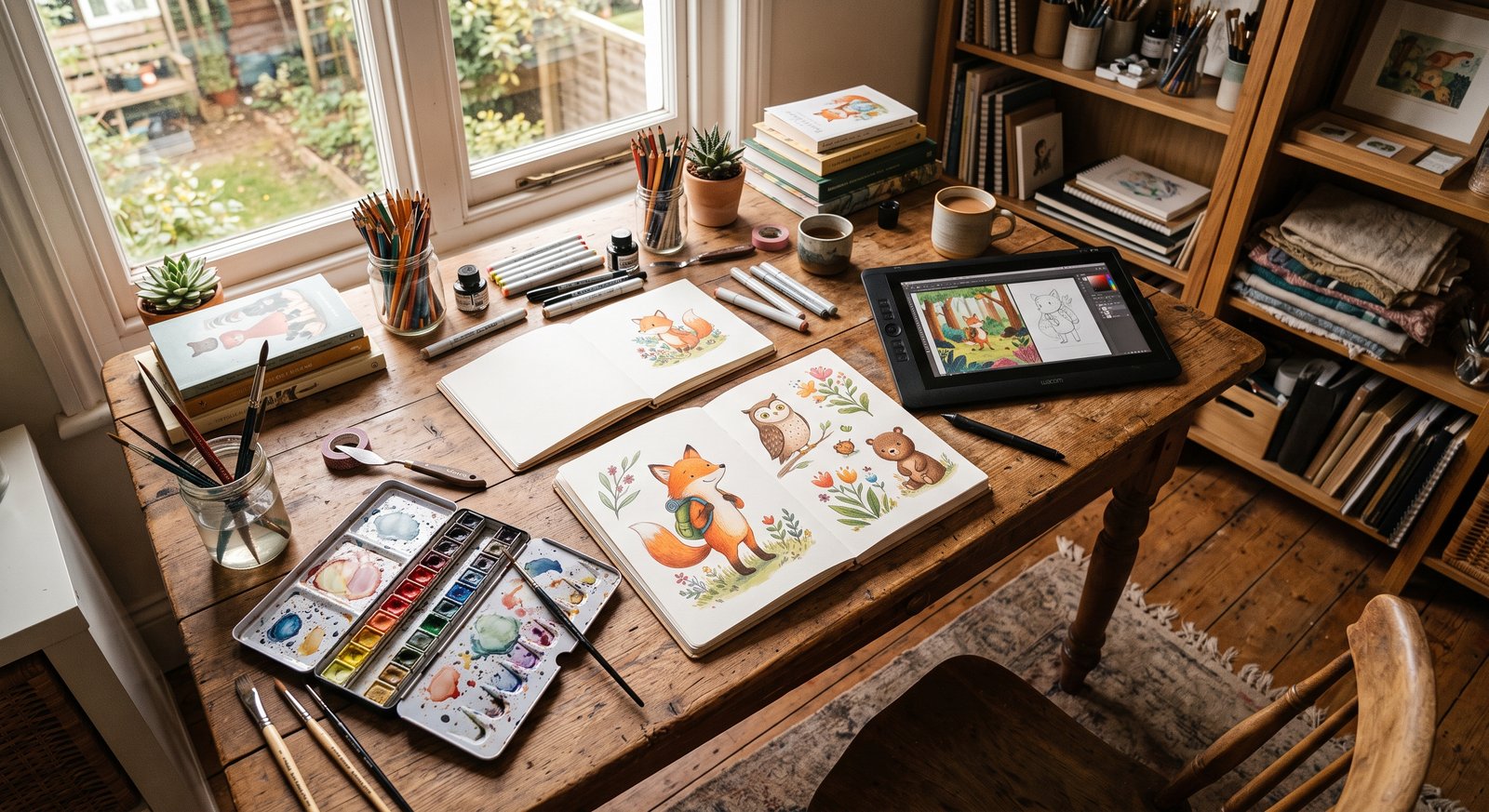
# Children's Book Illustration Brief: Step-by-Step Guide
A children’s book illustration creative brief is a structured document that aligns an author’s story with an illustrator’s visual interpretation. It outlines the manuscript's core themes, target age group, character designs, technical specifications, and project milestones. By setting clear artistic and logistical expectations, it prevents costly revisions and ensures a cohesive final book.
Bringing a picture book to life is an exciting collaborative journey. Whether you are an indie author self-publishing for the first time or an art director working with freelance talent, a solid creative brief is your project's roadmap.
---
What Is a Children’s Book Illustration Creative Brief?
A children’s book illustration creative brief is the foundational blueprint that guides an artist through visualizing your manuscript. It communicates narrative themes, aesthetic preferences, physical book dimensions, and production deadlines before any sketching begins.
Without a brief, you risk miscommunication, misaligned artistic visions, and endless rounds of revisions. A great brief does not micromanage the illustrator; instead, it establishes the sandbox they can creatively play within. It bridges the gap between your written words and the visual world your young readers will explore.
---
What Should You Include in a Children’s Book Illustration Brief?
A comprehensive illustration brief must cover project background, visual style, character descriptions, and technical parameters. Providing structured details ensures the artist understands both the emotional heartbeat of the story and the mechanical requirements of printing.
Here are the critical sections to include:
1. Project Overview and Target Audience
Direct Answer: State the working title, word count, genre, and specific age category of the book.
Children interpret art differently depending on developmental stage. A board book for toddlers (ages 0–3) requires bold, simple shapes and high contrast. A picture book for early readers (ages 4–8) can feature layered backgrounds, expressive subtext, and subtle visual jokes. Clarify: * Working Title: The name of your book. * Target Age Range: (e.g., Board book 0–3, Picture book 3–7, Middle grade illustrated 8–12). * Core Message / Tone: Is the book whimsical, educational, calming, or humorous? * High-Level Synopsis: A 2–3 sentence summary of the plot.
2. Art Direction and Visual Style
Direct Answer: Describe the desired mood, color palette, texture, and visual references without restricting the artist's original voice.
Illustrators need visual anchors to understand what you imagine. Use mood boards or links to existing picture books to communicate texture (watercolor, digital gouache, collage, vector) and lighting. * Mood & Tone: Warm, nostalgic, vibrant, minimalist, or cinematic. * Color Palette: Pastel, saturated primary colors, earthy tones, or monochrome with spot colors. * Reference Images: 3 to 5 sample images showing styles, linework, or color balance you appreciate. (Always clarify *what* you like about each reference, such as the character expressions or soft background blending).
3. Detailed Character Descriptions
Direct Answer: Outline physical traits, clothing, personality, and recurring emotional states for every main character.
Characters must remain visually consistent across every spread. When describing them, give the artist room to design while noting non-negotiable narrative details: * Demographics: Age, ethnicity, species (if animal/creature), hair type, skin tone. * Key Visual Identifiers: Signature clothes, glasses, a favorite toy, or specific markings. * Personality in Action: How do they walk? What is their default posture? Are they shy and curled up, or energetic and sprawling?
4. Technical Specifications
Direct Answer: Provide exact trim sizes, bleed margins, color profiles, and deliverable formats required by your printer.
Failing to establish print specifications upfront can ruin artwork if an illustrator draws in the wrong aspect ratio or resolution.
| Specification | Standard Picture Book Setting | Notes | | :--- | :--- | :--- | | Trim Size | e.g., 8.5" x 8.5", 8" x 10", 32 pages | Matches your chosen print-on-demand or offset printer | | Bleed | 0.125 inches (3mm) on all outer edges | Needed so art extends beyond the cut line without white borders | | Resolution | 300 DPI at 100% scale | Ensures crisp, print-quality images | | Color Mode | CMYK (Print) or RGB (Digital/eBook) | Clarify whether the artist works in RGB and converts, or works natively in CMYK | | File Formats | Layered PSD, TIFF, or print-ready PDF | Layered files allow text placement adjustments later |
---
How Do You Structure Page-by-Page Pagination?
A children’s book brief should break down the text across 24 or 32 standard pages, typically arranged in two-page spreads.
Instead of dumping the entire manuscript into one document, provide an illustration manuscript (or dummy breakdown):
1. Spread Number: (e.g., Spread 1: Pages 4–5). 2. Text on Page: The exact lines that will appear on this spread. 3. Action / Scene Suggestion: What is happening in the narrative. 4. Art Notes & Composition Ideas: Where the focal point should sit, whether text needs clean negative space, and any hidden details to include.
*Tip:* Avoid over-directing every brushstroke. Let the illustrator decide camera angles, perspective, and pacing.
---
Free Children’s Book Illustration Creative Brief Template
You can copy and adapt this outline directly for your upcoming book project:
```text PROJECT CREATIVE BRIEF: [BOOK TITLE]
1. PROJECT SUMMARY
- Author: [Your Name]
- Target Reader Age: [e.g., 4–8 years]
- Page Count / Format: [e.g., 32 pages, Hardcover Picture Book]
- Anticipated Release: [Date]
2. STORY ESSENCE
- Logline: [One sentence hook]
- Themes: [e.g., Kindness, courage, nature, family]
- Emotional Takeaway: [How should the reader feel at the end?]
3. VISUAL STYLE & MOOD
- Medium/Style Preference: [e.g., Soft digital watercolor, bold line art]
- Color Palette: [e.g., Earthy greens and warm golds]
- Reference Links / Moodboard: [Insert link to Pinterest board or PDF]
4. CHARACTER SHEETS
- Character 1: [Name, role, age, physical traits, emotional quirks]
- Character 2: [Name, role, age, physical traits, emotional quirks]
5. PRINT & TECHNICAL SPECIFICATIONS
- Trim Size: [e.g., 8.5" x 11" Landscape]
- Bleed: 0.125"
- Resolution: 300 DPI
- Delivery Format: [e.g., Layered PSD + high-res TIFF]
6. DELIVERABLES & MILESTONES
- Character Concept Sketches: [Due Date]
- Storyboard / Rough Thumbnails: [Due Date]
- Detailed Line Art: [Due Date]
- Final Color Renderings: [Due Date]
- Final Print Files: [Due Date]
7. BUDGET & REVISION TERMS
- Total Project Fee: [$ Amount or Royalty terms]
- Included Revisions: [e.g., 2 rounds at sketch phase, 1 minor round at final color]
```
---
What Common Mistakes Should You Avoid in an Illustration Brief?
The biggest mistakes in an illustration brief are micromanaging the scene composition, neglecting text placement space, and delivering vague feedback deadlines.
* Leaving no room for text: Children's book spreads need breathing room. If every inch of the page is packed with busy background details, typography becomes unreadable. Remind your illustrator to leave negative space for narrative blocks. * Telling rather than showing: Instead of writing "make it look cute," explain what "cute" means to you—such as oversized round eyes, soft lighting, and gentle pastel hues. * Changing specifications midway: Deciding to switch your trim size from square (8.5" x 8.5") to portrait (8" x 10") after sketches are approved forces the artist to redesign the entire layout. Settle your printer dimensions before sending the brief.
---
Frequently Asked Questions
Do I need a finished manuscript before drafting the illustration brief?
Yes. Your manuscript should be completely edited and finalized. Changing lines of text after illustration begins can disrupt page pacing and invalidate completed spreads.
How many reference images should I include in the brief?
Aim for 3 to 6 high-quality references. Providing dozens of conflicting styles will confuse the illustrator. Clearly label each image to explain whether you are referencing the lighting, the line texture, or character expressions.
Should I create a storyboard myself before hiring an illustrator?
Not necessarily. While you should assign text to specific pages (pagination), professional illustrators excel at visual pacing and dynamic compositions. Providing rough thumbnails can be helpful, but give your artist freedom to propose better visual solutions.
What is the difference between spot illustrations and full spreads?
A spot illustration is a small, standalone drawing surrounded by white space on a page. A full spread is a single, continuous piece of artwork that spans across both the left and right pages seamlessly. Ensure your brief specifies how many spots, single pages, and full spreads you need.